
Letter from the Lighthouse: Nobody signed up for my Editing Workshop
Turning shame into an opportunity for curiosity

Hello, reader!
Welcome to a new letter, where I share work-in-progress thoughts and budding ideas. In this one, I challenge the connection we often make between our self-worth and the content or initiatives we launch that “flop.” I chose to get curious about why nobody signed up for my Editing Workshop rather than feel ashamed about it.
Last September, I started hosting Editing Workshops in the Lab, my favorite online community. I wanted to get back into flexing my editing muscle, which had been dormant for a few years.
The feedback I received from the first session was so positive that we started thinking about how I could bring it out to more people. I made a mental list of the steps to get there, and got to work.
Brainstorm event structure and messaging, check.
Write event page, check
Get feedback on page, check.
Adjust pricing and copy based on feedback, check.
Add testimonials, check.
Pick a date, check.
Feel excited, check.
Feel scared, check.
Sketch out a rough promotion plan, check(ish).
I hit publish on the event page.
I was as ready as I could be.
Nothing happened.
Nobody signed up.
I didn’t host the workshop.
Instead of shaming myself for this failure, I want to open a conversation about it. In the online world, we often see stories of “failure” once the person has reached success. I think there’s value in sharing the messy bits in the moment – I see the value in reading those stories.
Upon reflection, there are several reasons nobody signed up, and none of them have to do with the quality of my work. I hosted yet another Editing Workshop in the Lab last week, and the feedback keeps confirming that this work matters.
This distinction is important.
In the past, I would have immediately associated this number (0) to my ability to deliver the service, and to its quality. But this has a lot more to do with how I talked about this workshop than the workshop itself. There is a disconnect there.
Here’s my attempt at discovering what this disconnect was, organized into four categories: (1) communication efforts, (2) missing context, (3) misconceptions to address, and (4) confidence.
(1) Communication efforts: I didn’t talk about the Editing Workshop nearly enough
I trusted my intuitive nature: I have been writing and publishing consistently without using deadlines or a content calendar for years. It has worked wonders, and I thought the same logic would apply.
This was different, though. I had to promote it, not write a 2,000-word essay about why I think editing is fun, creative, insightful, and even an essential practice to build a body of work that embodies who we are, how we think, how we work.
I could have been creative in my promotion, of course, but I had to be somewhat repetitive:
I had to start with: Hi, did you know self-editing is great? No? I’m hosting a workshop to show you why in a month!
I had to say: Come join my Editing Workshop in a month!
I had to repeat: Hey, did you know I’m running an Editing Workshop in two weeks?
I had to insist: Hello, do you think editing is shuffling commas around? Let me share a way to do it that won’t bore you to death!
Again: Come join my editing workshop in a week! It’s a no-judgment zone, promise!
And again: Only three days left, it’s now or never, sign up for the workshop!
I had to finally add: It’s tomorrow! Stop saying your writing is bad or unfinished and come learn how to get it across the finish line!
That would have accounted for 7 times, which, according to the godly Marketing Rule of 7, is the amount of time someone needs to hear a message before taking action.
Instead, I talked about it once at the bottom of an essay, once in a letter, once on LinkedIn, and I hoped people would come running to the sign up button (a little naive, or perhaps simply influenced by social media virality culture…).
(2) Missing context: Submitting a piece for editing is extremely vulnerable
The workshop works as follows: you submit a piece for editing, I edit the piece of my choosing in my own time, and I walk you through my thinking process during the workshop.
It’s the way I’ve run it for months inside the Lab community and it has been a creative exercise full of insights and great conversations. Most importantly, it has helped participants publish their (previously) “unfinished” pieces with confidence and excitement.
But here’s the thing: That community is in an extremely safe environment. All the girls who submit their pieces for editing have known me for years. They know me so well, in fact, that they have been lovingly referring to my compassionate editing and nudging style as “the Ely way.” They have also known each other for years and genuinely care about each others’ success — which includes publishing things that sounds like us.
This is exactly what I’m trying to replicate in my public workshops. How the heck do I explain this to someone who believes editing is meant to increase grammatical correctness and palatability?
(3) Misconceptions to address: We think editing is moving commas around and censorship
To edit for and within a community-centered format has been so much richer, such a wonderful opportunity for me to understand the gap between how I view editing and how most people who write view it.
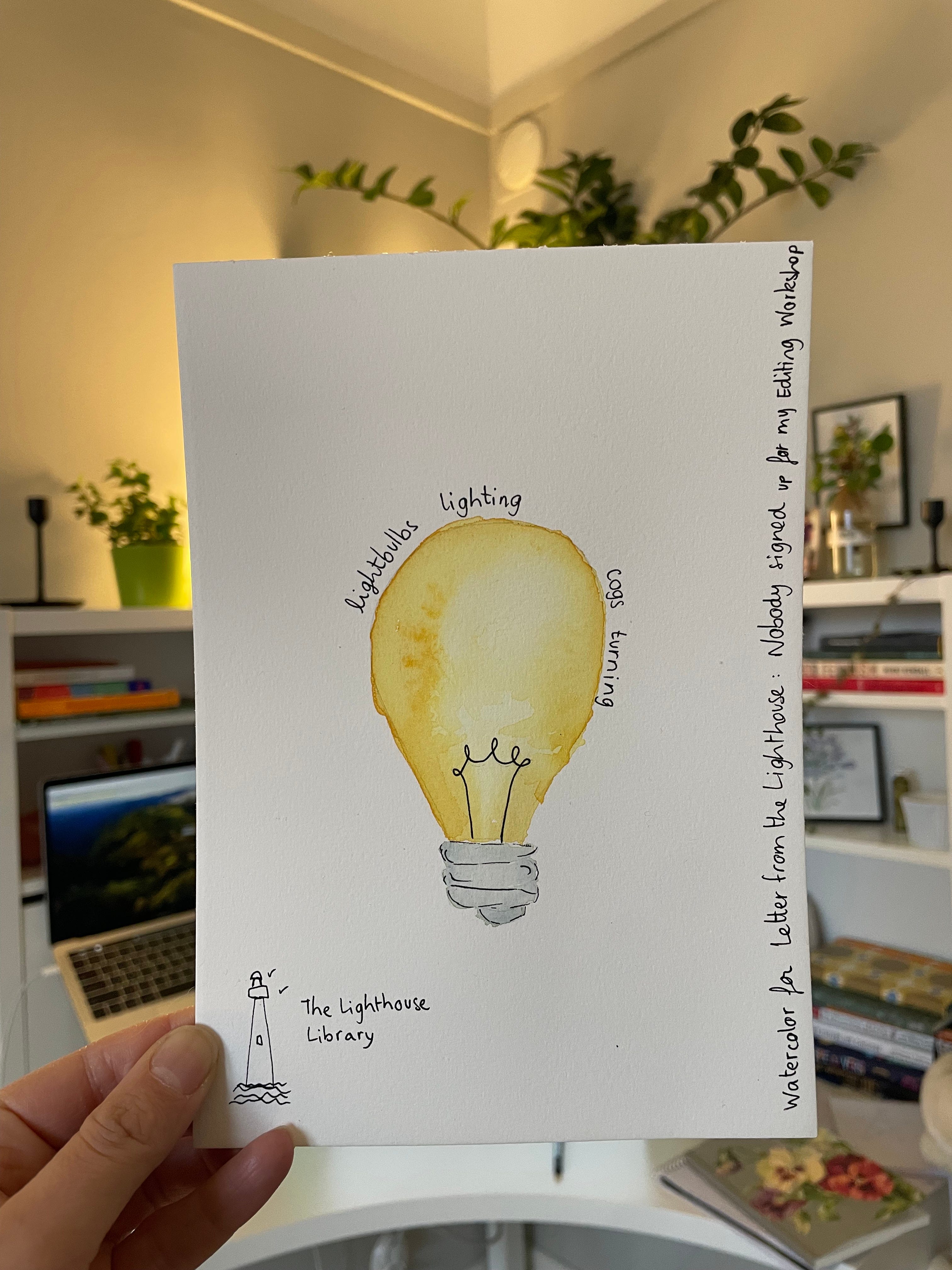
I get poked and prompted to share the behind-the-scenes of my thinking. I explain why I suggest that you expand on this or that paragraph (the reader will be curious), why I would shuffle this idea up (it blends your opinion with your story so well), and why you most definitely need to keep that sentence in (it’s long but the previous one is short, so it creates ease and flow). I explain things that I take for granted, like the difference between storytelling and opinion writing, and I see the lightbulbs lighting and the cogs turning.
There are so many ways to approach the last 20% of a piece, and many of them are accessible to all. They are mostly a new mindset, a new skill to learn. I need to raise a whole lot of awareness before everyone starts believing me… so much so that you’d be interested in learning it.
Case in point: This week in our Lab edition of the workshop, Jenny, who’s been joining every workshop since we started, had initially said she couldn’t find a piece that was “ready enough” for me to edit. I gently nudged her to send one anyways, because, well… that’s what these workshops are for.
She was stuck and we reshuffled paragraphs around. I had just introduced an exercise to add more storytelling or more opinion to your writing, and we used it to approach her piece. She ended up publishing it two days later. Without the workshop, she would’ve been stuck at “it’s not ready, but I don’t know what it needs to be ready.”
During our session, I mentioned that nobody had signed up for the public workshop. I voiced my fear about people thinking editing equals self-punishment, to which Jenny replied:
Are people mistaking editing for censoring? I think you’re already [changing people’s views on editing here]. I feel completely differently about editing than I did before we started these sessions. Before, if you’d said I have to edit my stuff, I’d think uuughhh but I hate that part! And now, I think this is part of the process, and it’s a fun part! It’s a meaningful part.
(4) Confidence: Putting myself out there mattered more than getting sign ups in this moment
The act of putting the event page together, getting creative to talk about reasons to become a better self-editor, picturing myself delivering a workshop to people I don’t know… That felt like a confidence-building experience in itself. I think that was all I could handle at this time of my new professional direction.
Eventually, I would love for my Lighthouse Library publication to be a real learning space, where writers and people who write come to find relief from the pressure of having to write “well.” I would like people to stop thinking that “perfectionism” and “inconsistency” are stopping them.
I’d love this space to be a cozy nook where we remember: In a world where putting things out for growth and virality, it is great to care so much about what you want to say, how you want to say it, and to whom. Let’s use this as fuel to take your writing further instead of it getting you stuck.
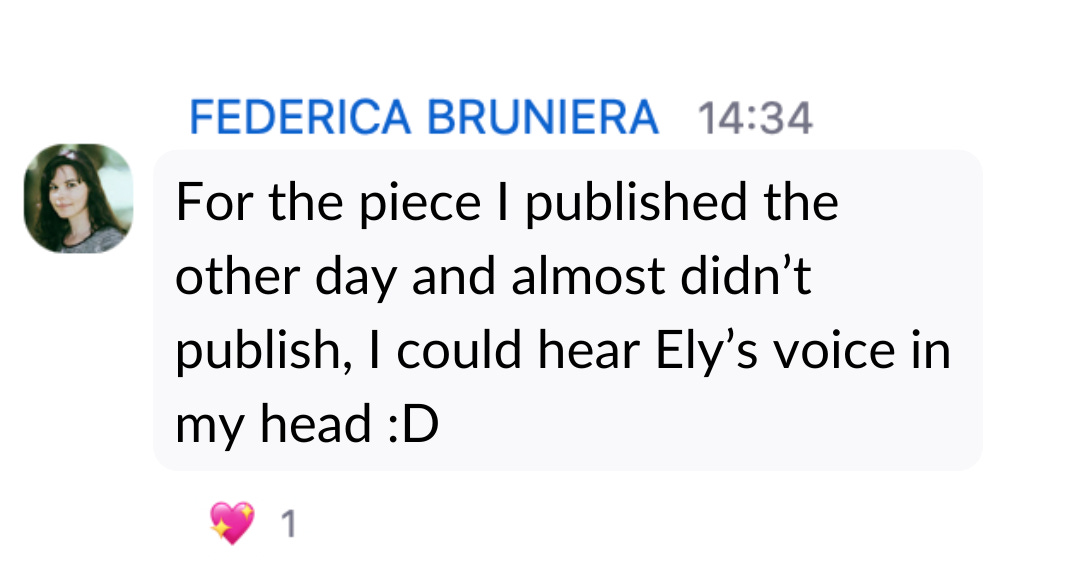
I’d love to be this gentle voice, just like for my friend Federica, that you hear when you get stuck at 80% in your writing. I’d like to be a comforting voice that says: It is normal and expected to get stuck - so much so that even editors have editors. I’d love to share all the actionable tools that have helped me (and now, the Editing Lab participants) move through those last difficult 20% of the work.
But am I there yet? I don’t know. Maybe I’m as scared to host the event as someone might be to submit a piece for editing. I’m proud of trying, and I’m proud of resisting the urge to be harsh on myself. I chose curiosity instead, just like I do when I receive a submission. I think that’s worth celebrating.
I’d love to hear from you.
How do you feel about editing?
Are you able to name what gets you stuck in your writing?
Is there something specific you need help with?
I have lots of strategies and tools, including many I use as a non-native of English. I’d be happy to start sharing them more. Let’s think about what could be useful for you together!
Hit reply to this email or comment below :)
Until next time - wishing you gentle sailing,
Ely
P.s. Here is a link to learn more about the Lab, the Digital Nomad Girls virtual community! If you work on your own but don’t want to do it alone and question hustle culture, come join us! Jenny, the founder, is also on Substack. This is the piece I edited at our last edition of the editing workshop 🌸
Thank you for this piece, Ely. As you said, it's easy to talk about "failure" after you succeed. Much harder to open a conversation about it. For the longest time I thought about editing as judgment of my skills as a writer, as a very personal judgment of who I am. That's the scary part, I think. And the work you are doing to change this is so important. 🫶